

At this year’s CAM Innovators’ Day, the near-market panel focused on practicalities: what does the real operating context look like in ports and airports, and how does CAM add value?
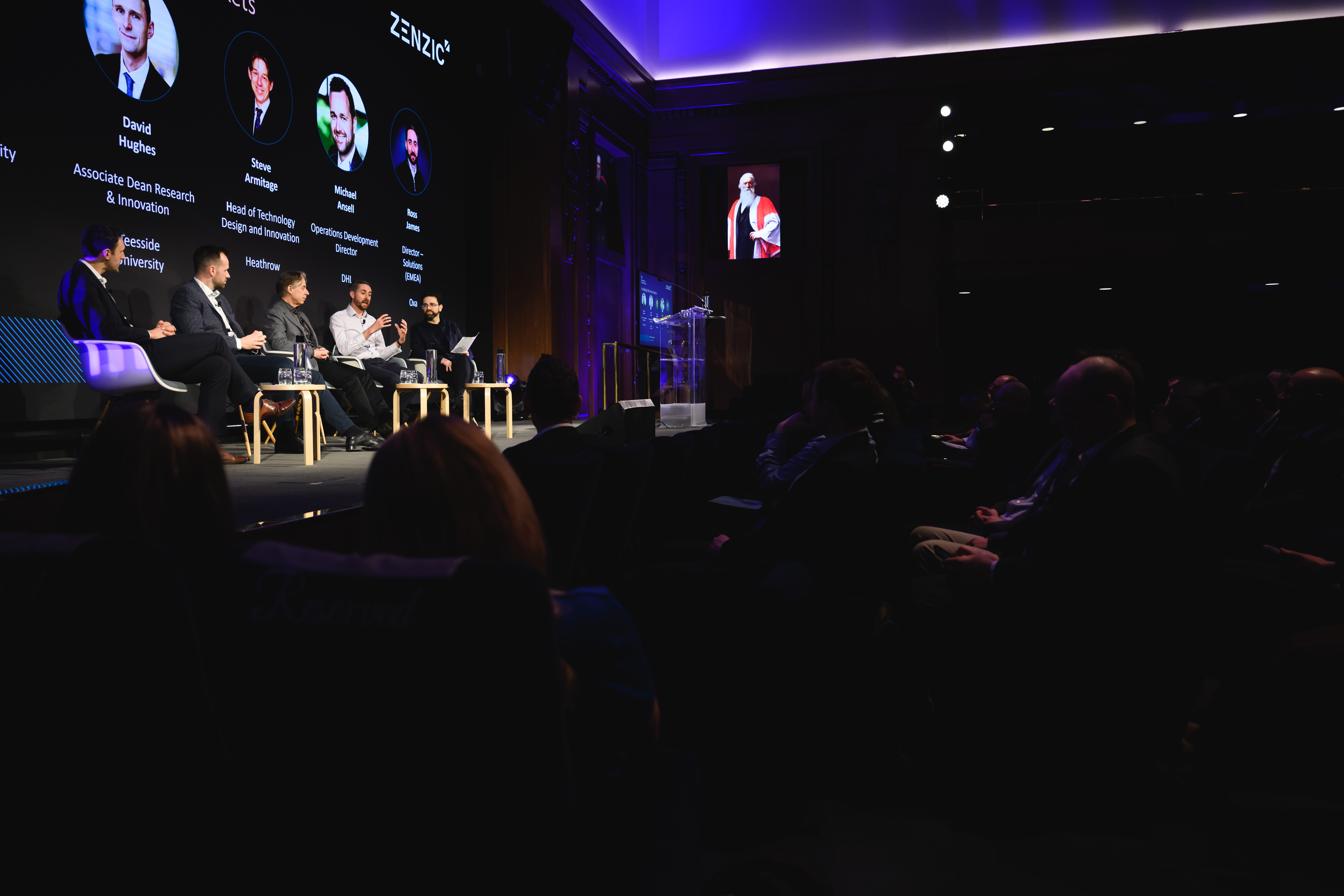
The session opened with a presentation from Westwell’s Benjamin Gaunt, followed by a panel chaired by Michael Hurwitz of PA Consulting and featuring David Hughes of Teesside University, Michael Ansell of DHL, Steve Armitage of Heathrow Airport and Ross James of Oxa.
The panel drew from extensive experience, from development to test and validation technology for real-world CAM deployments, to the operation of complex logistics, and the airport environment. The session covered technology capability, but centered on how to achieve integration within well-established and high throughput systems.
Complex environments, built for manual operation
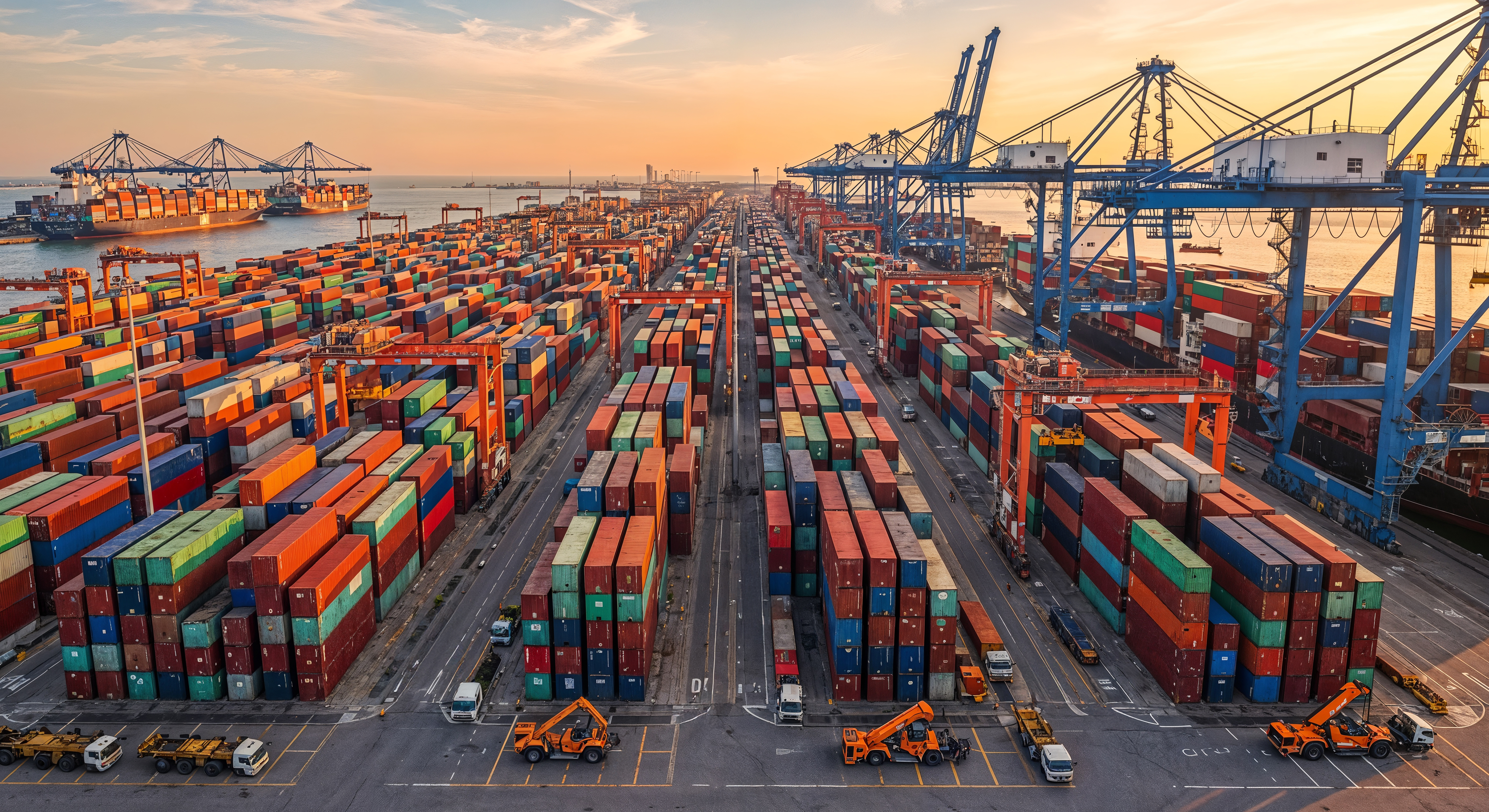
Ports and airports are often positioned as early opportunities for autonomy due to their structured nature. In practice, speakers described them as highly complex, time-critical environments, shaped over decades of experience to optimise human-led operations.
As Benjamin Gaunt, Senior Project Manager at Westwell, outlined from the Port of Felixstowe:
“Like much infrastructure in the UK, the Port of Felixstowe’s legacy infrastructure has been designed for human drivers… in some areas, we’ve got clearance between us and the container stack of 20 centimetres.”
These are established, high-throughput systems, where infrastructure, processes and behaviours are already tightly aligned to manual operation. In such an environment, autonomous vehicles must operate alongside existing traffic, integrate with live workflows and maintain continuity of service.
“When one of our trucks stops, we potentially slow the port down, slow the crane down and delay vessels.”
— Benjamin Gaunt
Deployment at scale
Examples shared during the session highlighted that autonomous systems are already operating at scale within port and airport environments across the globe.
At the Port of Felixstowe, 34 autonomous vehicles are currently in live operation, running continuously in mixed traffic. These vehicles have moved more than 140,000 containers over the 12 months leading up to the event, with further fleet expansion planned.
This reflects a shift from trial activity toward operational deployment, where autonomous systems are integrated into day-to-day logistics.
Integration within operational systems
Across the panel, discussion focused on how autonomous systems are introduced into existing operations.
Speakers referenced a number of interrelated factors that shape deployment:
Infrastructure
Legacy layouts and physical constraints influence how autonomy can be applied within operational environments.
Standards and safety
Frameworks exist, but their application to specific deployments requires interpretation.
“There is no definitive framework for how you deploy these vehicles.”
– Benjamin Gaunt
Operational workflows
Autonomous systems need to align with established processes governing how goods and services move.
Ross James, Director of Solutions at Oxa, : “Yes, it can drive from A to B… but when it gets to a gate, how does it know what to do? Integrating with the workflow is what makes it a useful service.”
People and behaviour
Human interaction remains a key part of the system, including how autonomous systems are understood and responded to in practice. Integrating to account for the human interaction with CAM technologies is critical for long term success.
“They’ve got their own workforces… who don’t have an understanding of how these work. We found that that creates mistrust, and that mistrust creates some very, very strange behaviour.”
– Benjamin Gaunt
Managing risk across the system
Safety was discussed as a central consideration in deployment, particularly in how it is approached within live operations.
Speakers described safety not only in terms of vehicle performance, but as a function of the wider system, including infrastructure, processes and people.
“If you try to eliminate all risk on the deployment of autonomous vehicles, you will never deploy it.” – Benjamin Gaunt
This reflects an approach where risk is assessed and managed across the operational system.
Coordination and orchestration
As technology integration increases, speakers highlighted the need for increased focus on coordination across multiple systems and stakeholders.
At Heathrow, this is reflected in the need to manage activity across a wide range of operators and assets.
Steve Armitage, Head of Innovation at Heathrow, described how this posed a challenge to its deployments. He said:
“We have so many partners… if you imagine 30 different companies with vehicles moving around, how do we control them? …we need to talk about orchestration.”
Michael Ansell, Operations Development Director at DHL, also referenced the role of orchestration tools:
“From an orchestration perspective… some of the tools being developed are already delivering value for current operations ahead of autonomous deployment.”
Supporting the flow of goods
Discussion also considered the role of autonomy in supporting the wider flow of goods through ports and airports.
David Hughes, leading the Digital Trade Testbed at Teesside University, described this in terms of trade facilitation:
“When I stopped seeing autonomous vehicles as just pieces of logistics… and saw them as vehicles of trade facilitation – that was the breakthrough.”
This includes applications such as improving processing times, reducing delays and enabling earlier decision-making through data.
Examples shared during the session indicated how these improvements can translate into operational and commercial benefits.
Evolving perspectives on deployment
Speakers also reflected on how industry perspectives are developing as deployments progress.
Where earlier discussions focused on technical feasibility, there is now an increasing emphasis on integration, operational alignment and scaling activity.
As Ross James noted:
“It’s not about if they’re going to invest… it’s about when and how many.”
A system-level view of CAM deployment
The examples and discussion shared during the session highlight how CAM is being applied within complex operational environments, especially ports and airports.
- Infrastructure designed for manual operation
- Established operational processes
- Multiple stakeholders within shared environments
- Autonomous systems introduced into that context.
The panel reflected how these elements are being addressed in practice, as CAM activity continues to move from trials toward commercial operation.
Share