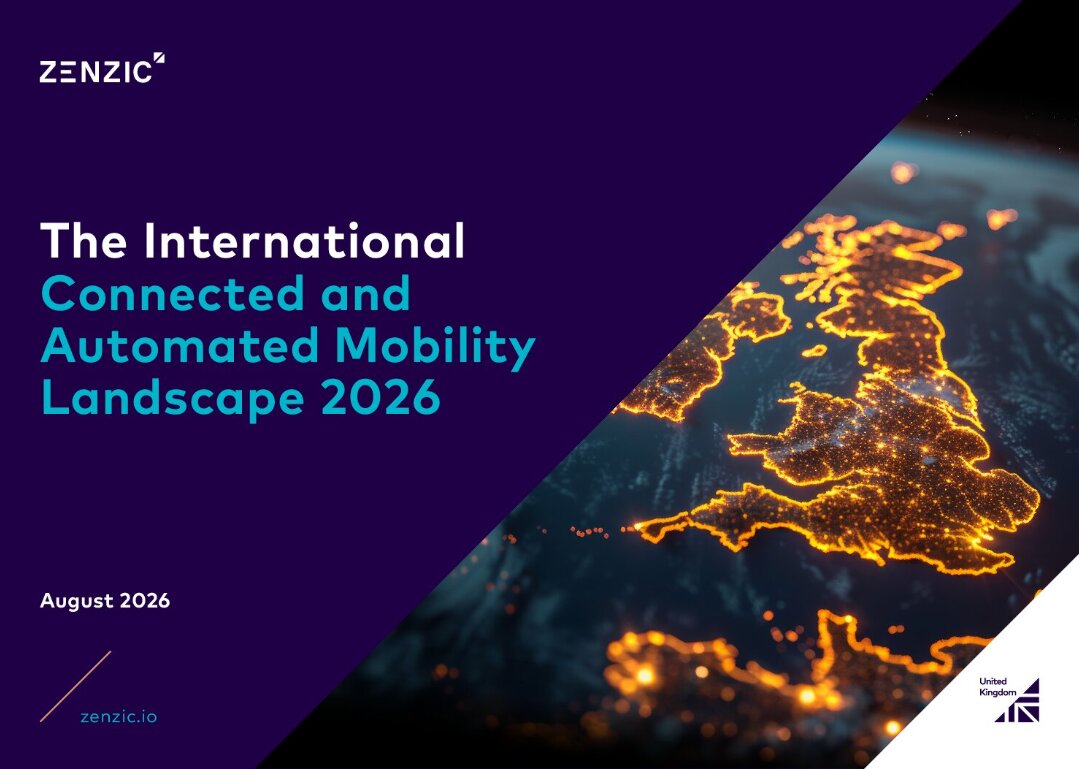



Reflections from Zenzic’s experience at JSAE 2026, and a preview of themes explored in Zenzic’s forthcoming International Connected and Automated Mobility Landscape 2026 report, launching this August. The report will be accompanied by a webinar exploring the lessons leading international markets can teach the UK about the future of Connected and Automated Mobility (CAM).
At JSAE 2026, discussions with industry leaders, government stakeholders and technology innovators revealed a consistent theme: technology is not viewed as an economic growth opportunity, or a race; it is the means to address real-world societal issues such as driver shortages, ageing populations, declining rural connectivity and freight resilience.
Many of these observations align with themes emerging from Zenzic’s forthcoming International Connected and Automated Mobility Landscape 2026 report. The visit provided a glimpse into why Japan remains one of the most interesting and strategically important CAM markets for the UK to understand.
Society First, Growth Follows
One of the most striking takeaways from JSAE was how clearly Japan aligns technology development with societal objectives.
Japan faces several well-documented challenges:
- An ageing population
- Declining rural transport services
- Logistics workforce shortages
- Decarbonisation pressures
- Labour constraints across multiple sectors
These issues are not unique to Japan. The UK faces many of the same challenges. However, what stood out was the level of alignment across government, industry and research organisations about the role CAM plays as part of the solution.
Conversations throughout the event consistently focused on maintaining mobility for communities, ensuring goods continue to move efficiently and supporting long-term social resilience.
From Investment to Innovation: Opportunities for UK-Japan Collaboration
Several discussions at JSAE highlighted the strengths and opportunities for UK-Japan collaboration. Horiba reaffirmed its long-term commitment to MIRA through a ten-year investment strategy, with ambitions to expand capabilities in areas such as simulation, battery testing and advanced vehicle development, while also exploring opportunities beyond automotive, including cybersecurity, semiconductors and sustainable infrastructure. Nissan showcased several UK-backed innovation programmes, demonstrating the potential for joint commercialisation of electrified and autonomous technologies. Meanwhile, a demonstration ride in a Tier IV autonomous bus provided a compelling example of how rapidly autonomous systems are maturing in the on-highway space, building on testing taking place at Horiba MIRA in the UK. Across all three organisations, there was a consistent theme: growing interest in software-defined vehicles, autonomous systems, and collaborative R&D, underpinned by recognition of the UK’s strengths in software engineering, systems integration, safety, cybersecurity, and verification and validation.
Government Collaboration: Strong Interest in Doing More Together
Meetings with Japanese government stakeholders highlighted clear areas of alignment between UK and Japanese priorities.
METI (Ministry of Economy, Trade and Industry)’s areas of focus include:
- Decarbonisation
Particularly battery technologies and future energy solutions.
- Autonomy
Using CAM technologies to address labour shortages and support mobility services.
- Digitalisation
Accelerating Software Defined Vehicle (SDV) development and deployment.
Perhaps most encouraging was the appetite for greater UK-Japan collaboration.
Several opportunities were discussed, including:
- Joint funding calls
- Challenge-led innovation programmes
- Collaborative R&D projects
- Cross-border deployment initiatives
A recurring theme was the importance of establishing stronger frameworks between NEDO and Innovate UK to facilitate international funding and support collaborative projects.
As the UK seeks to strengthen international partnerships and grow its CAM ecosystem, these conversations highlight significant potential.
Why the UK Continues to Matter
Throughout JSAE, Japanese organisations consistently highlighted the value they see in the UK ecosystem.
Strengths included:
- Software engineering
- Systems integration
- Functional safety
- Cybersecurity
- Verification and Validation (V&V)
- Human factors expertise
- Testing and deployment environments
Stakeholders also noted that the UK often provides greater flexibility for testing and real-world pilot activities than some other markets.
As CAM evolves towards increasingly software-defined architectures, these strengths become more important. Japanese organisations recognise the UK’s ability to contribute across the software, assurance and validation layers of the mobility stack.
Looking Ahead
The strongest takeaway from JSAE 2026 was that UK and Japanese mobility priorities are becoming increasingly aligned.
Both countries are exploring how CAM can help address labour shortages, ageing populations, freight resilience, rural mobility challenges, decarbonisation and economic growth. What was particularly evident throughout the visit was Japan’s ability to align policy, regulation and technology development to create a strong sense of direction for industry and government around their societal outcomes.
Japanese organisations increasingly recognise and value UK capabilities, particularly in software development, systems integration, safety assurance, cybersecurity and verification and validation. With growing interest from organisations such as Nissan, Honda, Tier IV and Horiba MIRA, alongside support from government bodies including METI and NEDO, the foundations for deeper collaboration are already being established.
Many of these themes will be explored further in Zenzic’s forthcoming International Connected and Automated Mobility Landscape 2026 report, publishing in August. The report examines how leading international markets are approaching CAM development and commercialisation, while identifying opportunities for the UK to strengthen its position within the global mobility ecosystem.
To hear more about the findings and discuss what they mean for the UK CAM sector, join our upcoming webinar:
International Connected and Automated Mobility Landscape 2026 Webinar
📅 6 August 2026
🕚 11:00–12:00 (UK time)
🔗 Register here: https://events.teams.microsoft.com/event/b5e283fc-d968-4914-a254-70f07cf88258@8806c477-858f-41e0-8653-9f880f3b99e4
If JSAE 2026 demonstrated anything, it is that the future of mobility will not be built by countries working in isolation. The greatest opportunities will come from international collaboration, shared expertise and a collective focus on solving society’s most pressing transport challenges.
Share