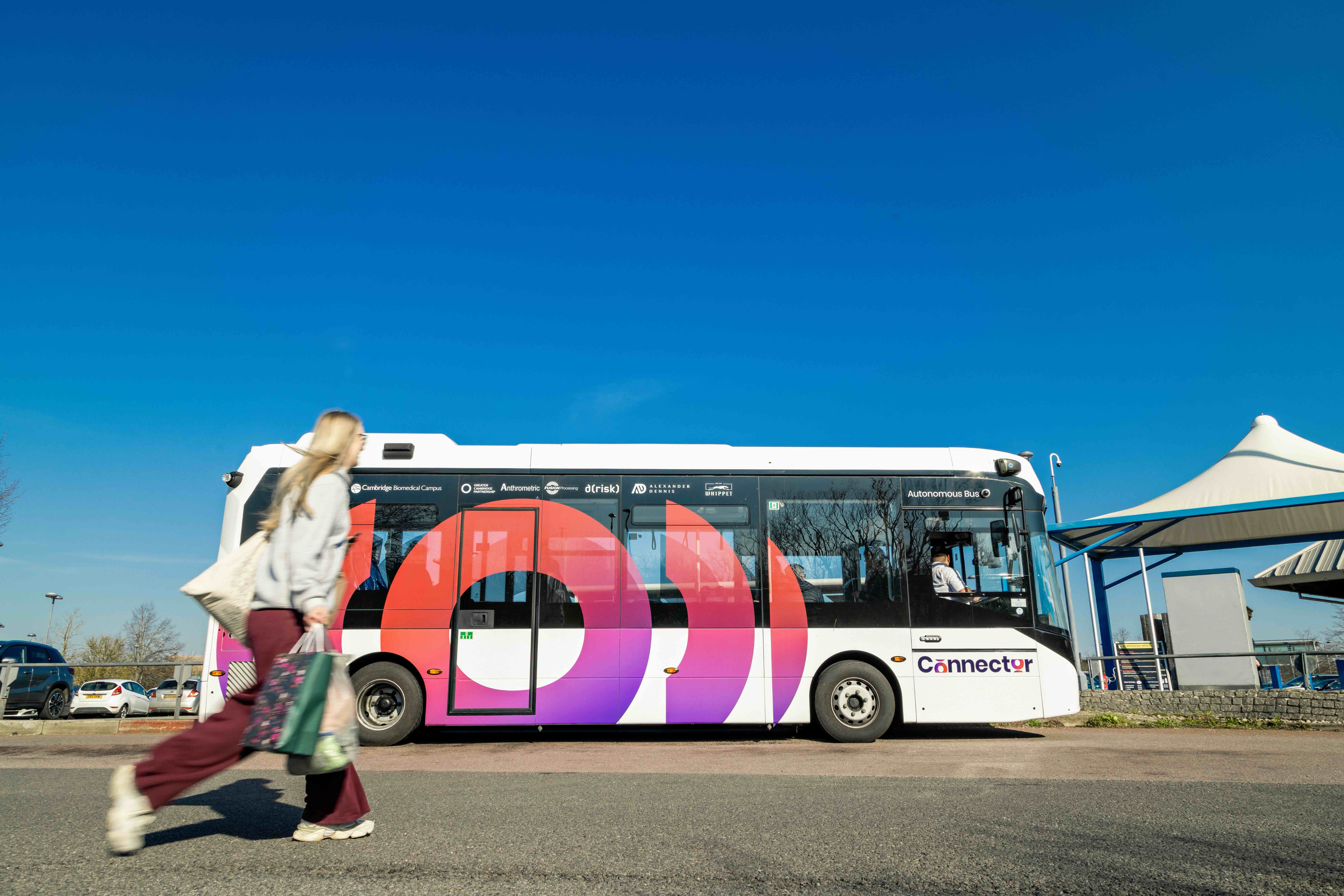



Wrightbus, the UK’s leading zero-emission bus manufacturer, is exploring how autonomous vehicle technology could address some of the most pressing challenges facing the public transport sector.
The Ballymena-based company is a lead partner in ASPIRE, one of eight projects selected under the Feasibility Studies 2 competition, which forms part of the CAM (connected and automated mobility) Pathfinder programme.
Delivered by the Department for Business and Trade, the programme aims to grow the UK’s £3.7 billion connected and automated mobility industry.
ASPIRE will examine how self-driving vehicles could help solve a critical UK mobility challenge – addressing structural driver shortages, rising operational costs, and the need to maintain connectivity in communities while meeting zero-emission mandates.
ASPIRE is not pursuing immediate full-scale autonomy, but adopting a phased, evidence-driven approach to test what works, measure the results, and use what it learns to make it safer and easier to introduce self-driving passenger services in the future.
Wrightbus is joined in the project by academic partners Loughborough University and Queen’s University Belfast, which has collaborated with Wrightbus on advanced powertrain and vehicle engineering research for over 25 years.
Dr Andy Harris, Head of Research and Data Analytics at Wrightbus, said: “Driver shortages and the pressure to decarbonise are the two biggest challenges facing UK public transport operators today. ASPIRE gives us the opportunity to explore how autonomous technology, combined with our world-leading zero-emission vehicles, could offer a genuinely transformative solution not just for operators, but for the communities they serve.
“This investment reflects the confidence the UK Government has in Wrightbus as an innovation leader, and we are proud to be working alongside Loughborough University and Queen’s University Belfast to develop a credible, commercial business case for the future of autonomous public transport.”
The ASPIRE study is funded by UK Government, as part of the CAM Pathfinder Programme. CAM Pathfinder is delivered by DBT’s Connected and Automated Mobility (CAM) team, in partnership with Innovate UK and Zenzic. It is one of eight projects nationwide to receive funding under the Feasibility Studies 2 competition. Other selected projects include studies into autonomous freight vehicles, self-driving private-hire services in London, and driverless shuttle operations across NHS estates.
Mark Cracknell, Programme Director at Zenzic, said: “CAM solutions have the potential to unlock new business opportunities and economic growth in all corners of the country. These feasibility studies will help to articulate the impact that market ready CAM technologies can have on both business productivity and economic growth.
“We are excited to start working with the organisations delivering each of the eight projects to further develop their business cases, demonstrate the commerciality of their solutions and paint a clearer picture of the commercially viable CAM solutions coming down the road.”
Claire Spooner, Director of Innovation Service at Innovate UK said: “This latest tranche of funding from the CAM Pathfinder programme will enable the UK to unlock the huge future benefits of these new CAM technologies. These projects, around the UK, will develop new solutions for a range of CAM applications and scenarios and they will enable the companies behind these innovations to scale and grow.”
ENDS
For more information, contact:
Dave Burrows
Head of PR
ROUS+
Share