

LONDON, 13th April, 2026 – A landmark study backed by the NHS is set to explore how UK hospitals and care facilities could benefit from deploying driverless shuttles across their estates and facilities.
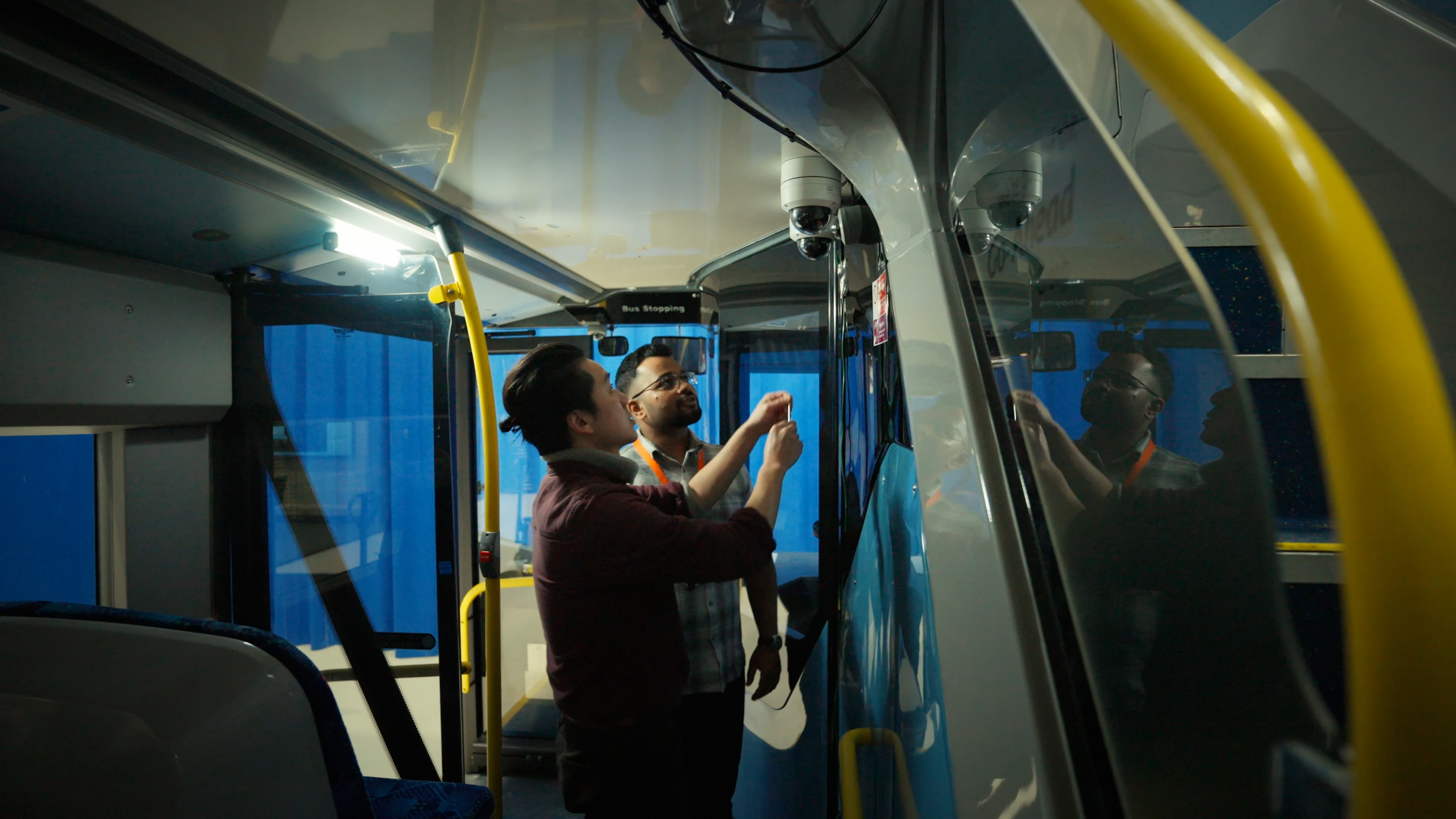
The Sentinel Shuttle feasibility study will bring together experts from the NHS, British disruption intelligence company, Moonbility and leading bus manufacturer, Alexander Dennis to explore the business case for deploying connected and automated mobility (CAM) solutions in healthcare environments.
On average, large healthcare campuses generate around 4,000 to 5,000 internal movements per day, including patient transfers, diagnostics, and staff circulation, with smaller estates generating 120 to 180 short trips daily, often involving mobility-impaired patients.
The study – which aims to produce an investment-ready blueprint enabling the procurement of such vehicles within one to two years – will see the trio work together to better understand the needs of hospital-goers, visitors and staff, as well as the challenges and commercial opportunities associated with such deployments.
This includes how deploying such technologies could help reduce internal transport delays, free up staff time and improve mobility for patients, particularly those with reduced mobility.
Andre Wang, CEO at Moonbility, said: “Large hospital estates already operate like transport networks, but without the same level of coordination or visibility.
“This study is about how we manage those movements more effectively, particularly for patients with reduced mobility, and define a practical, investment ready pathway for deploying automated shuttles within the next one to two years.
“At a time when the healthcare system is under sustained pressure, this supports better use of public resources and more reliable mobility for those who depend on it most.”
The Sentinel Shuttle feasibility study is one of eight projects to have received funding from the Feasibility Studies 2 competition as part of the UK Government’s £150 million CAM Pathfinder programme, delivered by the Department for Business and Trade in partnership with Zenzic and Innovate UK. All UK Government grant funding is subject to HMG approval.
The aim of the Feasibility Studies 2 competition is to support organisations to overcome key barriers to investment decisions in CAM technologies, both in private and public sector environments. Through the studies, organisations will set out to produce the mature business cases that will unlock advanced, at-scale deployments of CAM across the UK.
Mark Cracknell, Programme Director at Zenzic, said: Mark Cracknell, Programme Director at Zenzic, said: “CAM solutions have the potential to unlock new business opportunities and wider economic growth. Through the CAM Pathfinder programme, these feasibility studies will help to articulate the impact that market ready CAM technologies can have in all corners of the country.
“Along with the Department for Business and Trade (DBT), and Innovate UK, we are excited to start working with the organisations delivering each of the eight projects to further develop their businesses cases, demonstrate the commerciality of their solutions and paint a clearer picture of the viable CAM solutions coming down the road.” For more information on Zenzic, visit: https://zenzic.io/
[ENDS]
NOTES TO EDITORS
About Zenzic:
Zenzic was established by UK Government and industry to provide a trusted focal point and champion for the UK Connected and Automated Mobility (CAM) ecosystem. As a collaborative organisation, Zenzic helps to create alignment, build shared understanding, and ensure that progress in CAM contributes to national priorities.
Zenzic works in partnership with the Department for Business and Trade and Innovate UK to deliver the CAM Pathfinder programme, as part of the UK Government’s Advanced Manufacturing Sector Plan, providing £150 million of grant funding to enhance the connected and automated mobility (CAM) sector.
About Innovate UK:
Innovate UK, part of UK Research and Innovation, is the UK’s innovation agency. Our mission is to help companies to grow through their development and commercialisation of new products, processes and services, supported by an outstanding innovation ecosystem that is agile, inclusive and easy to navigate.
Share